
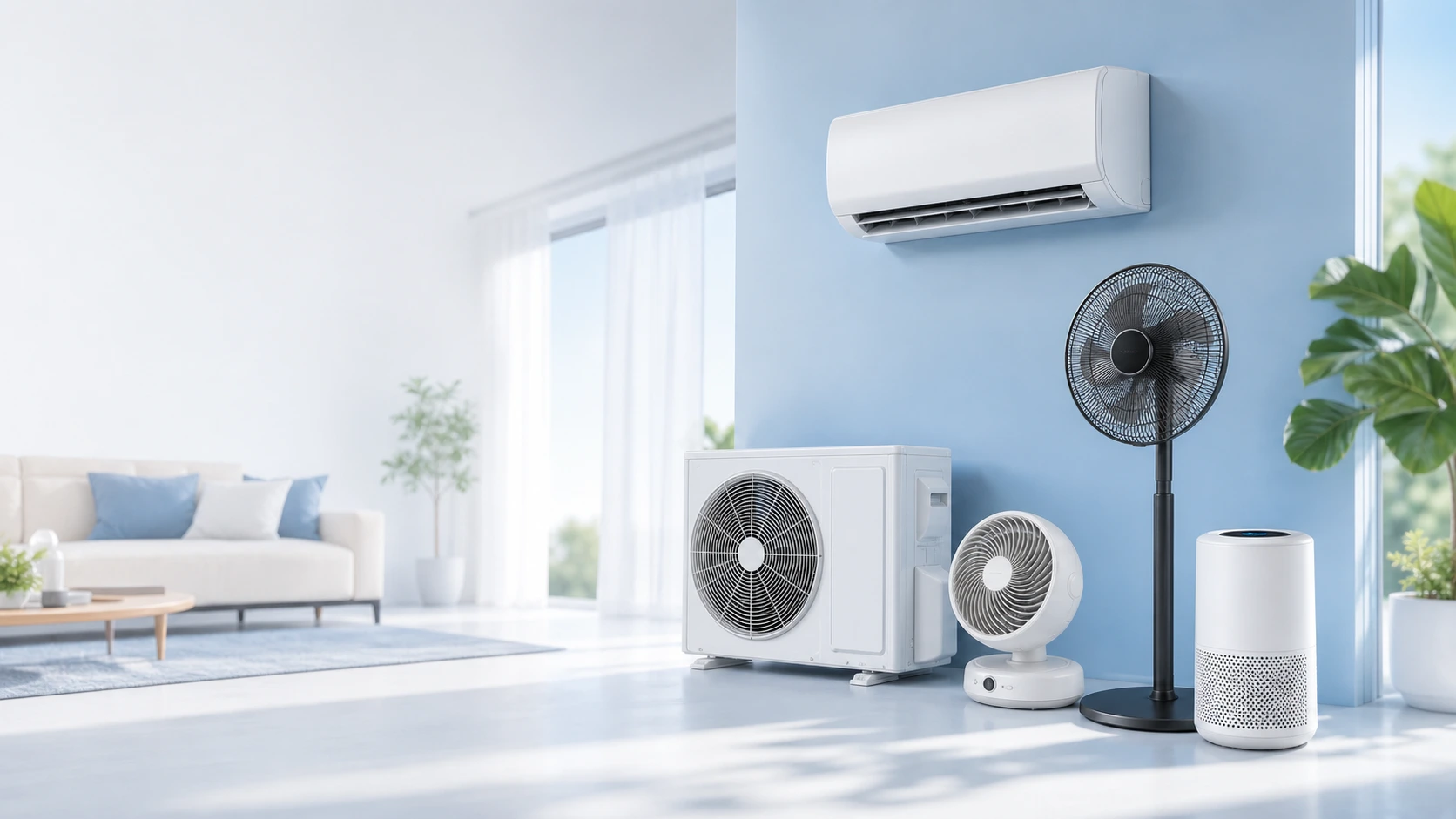
A well-maintained air conditioner consumes less, cools better and lasts longer. Most of the work comes down to a few simple steps you can carry out yourself, complemented by professional attention, some of which is in fact a legal requirement. Here is the full schedule and the mistakes to avoid.
Cleaning the filters, the most profitable step of all
Filters trap dust, pollen and allergens. Once clogged, they choke the airflow: the unit has to run longer for the same result, and its consumption climbs while its performance falls. This is by far the maintenance step with the best effort-to-benefit ratio.
The rhythm is every two to four weeks during the season of use. Shorten that interval if you live in a city, have pets, or if someone in the household suffers from allergies.
The method is simple. Switch off the power, remove the filter, vacuum it gently to lift the worst of the dust, then rinse it in lukewarm water if the manufacturer allows. Use neither hot water, which distorts the plastic mesh, nor harsh detergent, nor a stiff brush.
The critical point is drying. A filter refitted while still damp becomes a breeding ground for mould and bacteria, with the characteristic musty smell and degraded air that follow. Let it dry completely in open air, never in direct sunlight or on a radiator.
- Every 2 to 4 weeks during the season
- Lukewarm water only, never harsh detergent
- Complete drying is essential before refitting
- Shorter intervals in cities, with pets or allergies
The indoor unit beyond the filter
Behind the filter sits the heat exchanger, a network of fine metal fins. Dust that gets past the filter settles there and forms an insulating layer that degrades heat transfer. Gentle vacuuming with a brush attachment, once or twice a season, is enough for routine care. Never straighten the fins by hand, they bend very easily.
The fan wheel also accumulates a greasy film that is hard to see and unbalances the rotor, causing vibration and noise. Cleaning it thoroughly is a job for a professional.
Finally, check that condensate is draining. The indoor unit produces water which it discharges through a pipe. If that pipe blocks, water overflows into the room or into the wall. Seepage below the unit is the first sign, and it should not be left.
Looking after the outdoor unit
The outdoor unit rejects the heat captured indoors. To do that it needs unobstructed airflow. Anything that impedes it directly degrades the efficiency of the whole installation.
Keep its surroundings clear: fallen leaves, long grass, stored boxes, garden furniture. Allow at least fifty centimetres in front of the air outlet. A common trap is wanting to hide it behind a solid decorative enclosure, which suffocates it and drives consumption up.
Rinse the exchanger fins with a low-pressure hose, from top to bottom, once a year. Never use a pressure washer: it flattens the fins, and the damage is irreversible.
In winter, if the unit is not in use, a cover can protect the top against leaves, provided it does not enclose the unit, which must stay ventilated.
- At least 50 cm clearance in front of the air outlet
- Never a solid enclosure around the unit
- Annual low-pressure rinse, from top to bottom
- Never a pressure washer on the fins
Maintaining a portable air conditioner
A portable unit needs the same filter care, plus two points specific to it.
The condensate tray needs emptying on some models. Many recent appliances re-evaporate the water automatically, but in very humid weather the tray fills anyway and the unit shuts down as a safeguard. Check it regularly during muggy spells.
The exhaust hose deserves a check at the start of the season: a pierced, crushed or badly seated hose sends hot air back into the room and cancels much of the appliance work. Check the window sealing kit too.
Before storage, run the unit in fan-only mode for two to three hours. That dries the circuit and avoids the musty smell when you restart it the following summer. Store it upright, never on its side, so the compressor oil stays where it belongs.
Recognising the warning signs
Some symptoms fall under routine maintenance, others call for a professional without delay. Telling them apart saves both unnecessary call-outs and aggravated breakdowns.
- Cools less well than before: clogged filters, or insufficient refrigerant charge
- Unpleasant smell on start-up: residual moisture and mould in the circuit
- Frost on the pipes or exchanger: insufficient airflow or low refrigerant, have it checked
- Water leaking into the room: blocked condensate drain
- A new noise, rattle or vibration: loose fixing or unbalanced fan wheel
- Repeated tripping of the breaker: electrical fault, stop using it and call someone out
Professional servicing, and what the law requires
Beyond routine care, an annual professional check preserves performance and service life: leak testing of the circuit, verification of the refrigerant charge, pressure readings, tightening of electrical connections and deep cleaning of the fan wheel.
One point goes beyond mere advice. Refrigerants are fluorinated greenhouse gases, and handling them is strictly restricted to companies holding a certificate of competence. You therefore cannot lawfully top up or replace the charge of a circuit yourself.
European regulation also imposes periodic leak testing for equipment whose charge exceeds certain thresholds, expressed in tonnes of CO2 equivalent. Ordinary domestic air conditioners generally sit below those thresholds, but a substantial multi-split installation can reach them. If in doubt, ask your installer to confirm: they hold the equipment record.
An air conditioner losing refrigerant is not merely less efficient, it releases a gas with high warming potential. A gradual, unexplained fall in performance should raise the suspicion of a leak and prompt a check.
- Professional check once a year
- Handling refrigerant is prohibited for private individuals
- Leak testing mandatory above certain charge thresholds
- Gradual loss of efficiency: suspect a leak
The maintenance schedule to remember
Across a year, maintaining an air conditioner comes down to four appointments, three of which you handle yourself.
- Every 2 to 4 weeks in season: clean the filters
- Start of season: check condensate drainage, the hose and the window seal
- Once or twice a season: dust the indoor exchanger
- Once a year: rinse the outdoor unit and book the professional visit
- End of season: fan-only mode for 2 to 3 hours before storage
Frequently asked questions
How often should I clean an air conditioner filter?
Every two to four weeks during the season of use, and more often in a city, with pets or in case of allergies. A clogged filter chokes the airflow: the unit consumes more for a lesser result. Rinse in lukewarm water without harsh detergent, and let it dry completely before refitting, otherwise mould and odours develop.
Why does my air conditioner smell bad on start-up?
It is almost always residual moisture that has sat in the circuit and allowed mould to develop. Two common causes: a filter refitted while still damp, or storage without drying the unit first. The preventive remedy is to run it in fan-only mode for two to three hours before any extended period of shutdown.
Can I recharge the refrigerant myself?
No, it is legally prohibited. Refrigerants are fluorinated greenhouse gases whose handling is restricted to companies holding a certificate of competence, with staff holding an attestation of aptitude. A gradual, unexplained loss of efficiency should raise the suspicion of a leak and prompt a professional check.
What should I do if frost appears on my air conditioner?
Frost indicates either insufficient airflow or a low refrigerant charge. Start with the simplest: switch the unit off, let it defrost completely, then clean the filters and check that nothing obstructs the airflow. If it recurs with clean filters, the charge is probably low and a professional is needed.
Can I clean the outdoor unit with a pressure washer?
Definitely not. High pressure flattens the fine fins of the exchanger, and the damage is irreversible: efficiency falls permanently. Use a low-pressure hose directed from top to bottom, once a year. Above all, maintain at least fifty centimetres of clearance in front of the air outlet, with no solid enclosure around the unit.
Is annual professional servicing mandatory?
It is strongly recommended in all cases, to preserve performance and service life. In regulatory terms, periodic leak testing is required above certain refrigerant charge thresholds, expressed in tonnes of CO2 equivalent: ordinary domestic units generally sit below them, but a substantial multi-split installation can reach them. Your installer, who holds the equipment record, can confirm.
Ready to take the next step?
Browse our Air Conditioning & Ventilation selection